
Those scratch marks on your cutting board aren't just wear and tear. Here's where the plastic went.
A routine deep-clean turned up something unpleasant on a board I'd used almost daily for six years. The fix turned out to be a material most home cooks have never considered.
I want to be clear that I am not a scientist, a chef, or anybody with a reason to care deeply about chopping surfaces. I am a person who cooks dinner most nights and had, until March, given her cutting board roughly zero thought.
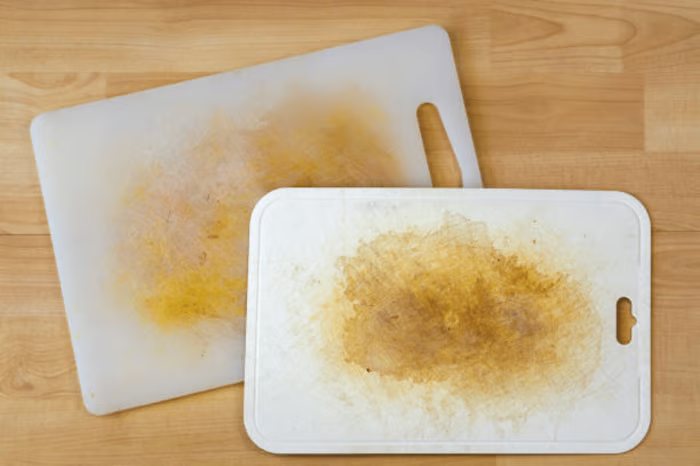
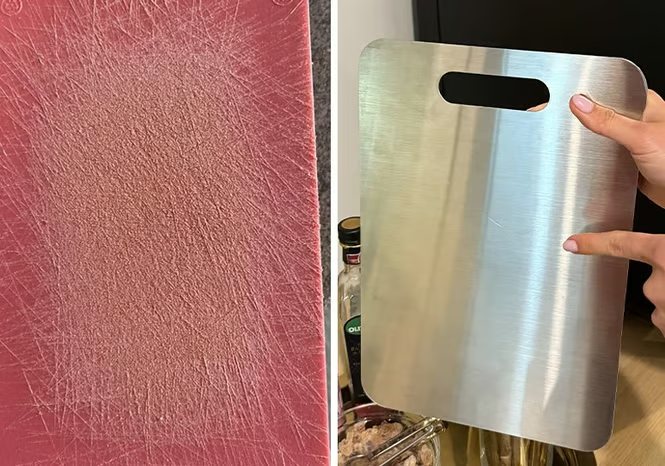
What changed was a soak. I'd left the board in hot water and a bit of bleach after a batch of tomato sauce, expecting the orange tint to lift. It did. What was left underneath was a dense mat of knife scars — hundreds of them, crossing each other, deep enough to catch a fingernail.
And the obvious question arrived with them: those grooves are missing material. Where did it go?
The bit every home cook should probably know
Polyethylene and polypropylene — the two plastics almost every consumer cutting board is made from — are soft by design. That's the point. A softer surface is kinder to your knife edge than glass or stone.
The trade-off is that every pass of the blade shaves a little off. Not in visible flakes; in fragments far too small to see. Researchers looking at this have found that chopping on a plastic board releases microplastic particles into the food being prepared, with the quantity rising as the board accumulates damage.
Which is the part that bothered me. A scratched board isn't just cosmetically past it — it's shedding faster than a new one.
“A board that looks worn out is not just ugly. The damage is the mechanism.”
Why I didn't just switch to wood or glass
This was my first instinct, and I spent an evening talking myself out of both.
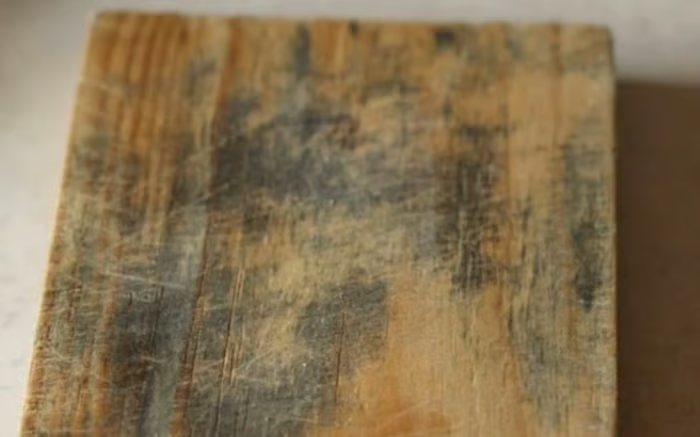
Wood doesn't shed plastic, obviously. But wood is porous, and a board that goes from raw chicken to salad needs to be genuinely clean, not just wiped. Mine had also warped along one edge and grown a grey bloom near the end grain that no amount of scrubbing shifted.
Glass and stone solve the hygiene problem and create a new one: they are harder than your knives. Every chop is your blade losing the argument. If you own knives you actually like, glass is an expensive way to ruin them.
So: not plastic, not wood, not glass. Which left me stuck, until a reply on a cooking forum pointed somewhere I hadn't looked.
“Have you looked at titanium?”
I had not, because it hadn't occurred to me that anyone made cutting boards out of it.
The pitch, as it was explained to me: titanium is non-porous, so there is nowhere for bacteria to sit. It doesn't rust, stain or absorb odour. And critically it's dense enough that a knife doesn't carve grooves into it — which means no accumulating damage, and nothing shedding into your food.
The objection I raised immediately — won't a metal board destroy my knives the same way glass does? — turns out to be the interesting part. Titanium sits lower on the hardness scale than tempered glass or granite, and the surface is finished rather than polished, so the blade meets some give. It is not as forgiving as end-grain maple. It is nothing like chopping on a plate.
First impressions, and the part I got wrong
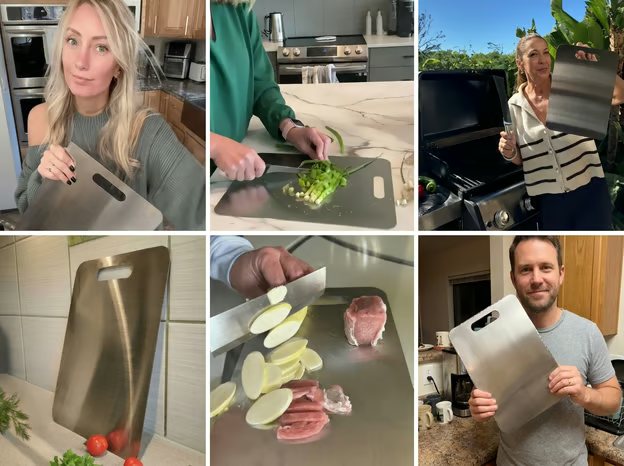
It arrived heavier than I expected and colder than I expected, which sounds obvious for a piece of metal and still surprised me. It is thin — closer to a sheet than a block — with a cut-out handle at one end and a brushed finish that hides fingerprints better than the photos suggest.
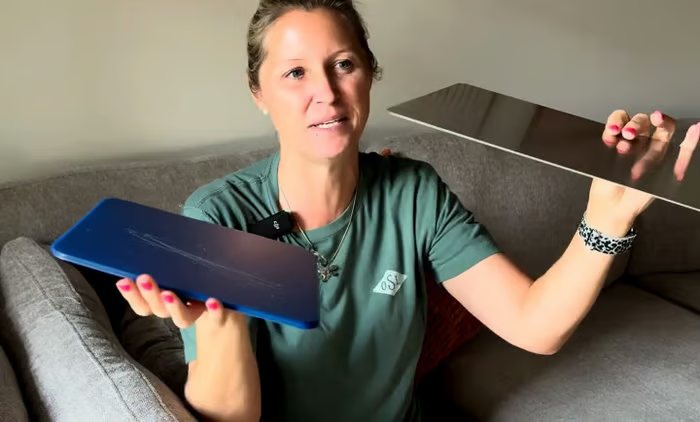
My first chop was genuinely unpleasant. There's a bright, hard sound that a wooden board simply does not make, and my instinct was that I'd made an expensive mistake.
That lasted about four days. It is a sound, not a problem — and it stopped registering once I'd got used to it. What I noticed instead was that the board doesn't move. It's heavy enough to stay put without a damp cloth underneath, which I hadn't realised was a daily annoyance until it went away.
Three months on — the honest verdict
Here's what I'll actually stand behind after a season of ordinary use.
What holds up
- No scratches. Not faint ones — none I can find.
- Raw chicken then vegetables, with a wash between, without the low-level worry.
- Garlic and fish leave no smell behind at all.
- Goes in the dishwasher and comes out unchanged.
- Doesn't slide on the worktop.
What I'd warn you about
- The noise. It's real, and some people won't get past it.
- It's cold to the touch, which is odd with bread dough.
- Thin means no juice well — a roast chicken will run off the edge.
- It costs several times what a plastic board costs.
- Heavy enough that I wouldn't hand it to a child.
What about the price?
This is the honest sticking point and I won't pretend otherwise.
A plastic board is a few dollars. This is not. What made it defensible for me was the arithmetic of replacement: I'd bought four plastic boards and one wooden one in six years, because they all reached a point where I didn't want to eat off them any more.
A board that doesn't develop the damage in the first place doesn't reach that point. Three months isn't long enough for me to promise you a decade — but it is long enough to say it looks exactly as it did on day one, which is more than any board I've owned can claim at three months.
Sold direct by the manufacturer.
See full specifications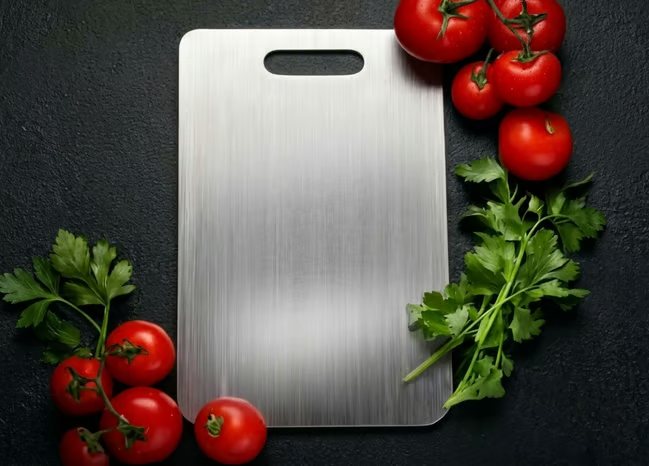
So what would I actually tell you to do?
Go and look at your board. Tilt it under the kitchen light so the scratches catch.
If it's smooth, you have nothing to act on today and I've wasted seven minutes of your time. If it looks like mine did — a crosshatch you can feel with a fingernail — then it is worth knowing that the grooves came from somewhere, and that the material that used to fill them went into whatever you were cooking.
Replace it with something. Whether that's titanium, a fresh plastic board every six months, or end-grain wood you're disciplined about oiling, matters less than not carrying on with the one you've got.
The board I switched to
Non-porous titanium · dishwasher safe · no scratch accumulation
View product details30-day returns · Ships from the US
References
- Environmental Science & Technology — research on microplastic release from polyethylene and polypropylene chopping boards during food preparation.
- Journal of Food Protection — surveys of bacterial retention in knife-damaged versus undamaged cutting surfaces.
- USDA Food Safety and Inspection Service — consumer guidance on cutting board hygiene and replacement.
Citations are indicative of the published literature on this topic and are provided for background. This page is promotional content, not peer-reviewed research.